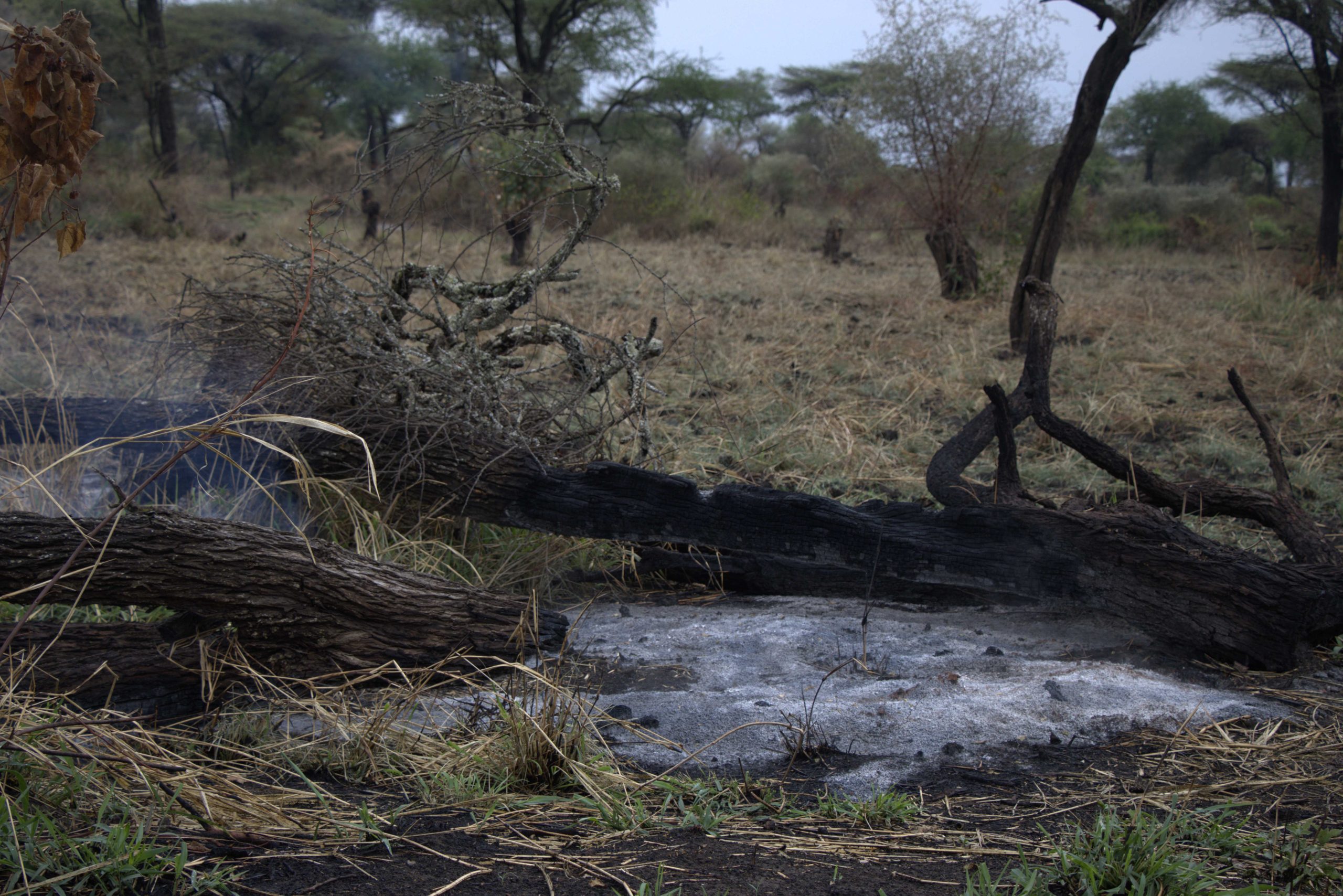
In May 2023, President Yoweri Museveni issued Executive Order No.3 banning commercial charcoal production and trade in Karamoja, Teso, Lango, Acholi and West Nile Regions as a measure to reduce the massive deforestation in those areas.
Almost three years later, the charcoal trade in most parts of northern and north-western Uganda continues to boom despite some efforts by security forces to crack down on producers, transporters and sellers. Reports indicate that Uganda consumes about one million metric tons of charcoal annually, with consumption increasing significantly every year.
In Karamoja, locals attribute their entry into the charcoal trade on the drought that has made it unsustainable to engage in agriculture. Ironically, the continued felling of trees in the Region will increase the drought and further diminish any hopes for agriculture as a viable source of livelihood.
Tree cutting for charcoal has not always been a common practice for the locals in the Karamoja Region. Traditionally, Karamojong, Pokot and the other native pastoralist tribes in the Region have always conserved the environment and considered it sacred because it served multiple functions to support their way of life.
First, some specific trees were considered cultural sites where important rituals like initiating young men into manhood took place. Cutting down such trees attracted untold curses on the person. Second, trees had medicinal value as important providers of medical herbs to treat diseases of both humans and livestock. Third, trees – particularly the soapy kind, were used for sanitation and hygiene to bathe and clean homesteads. Fourth, trees were sources of raw materials for construction of homesteads and, finally, albeit to a small extent, dry trees or their branches were sources of energy for cooking and lighting.
“Historically, Karamojong never used to burn charcoal,” explains Lotyang Francis, the Senior Assistant Chief Administrative Officer for Moruita Sub-County in Nakapiripirit District. “They used cow dung instead [for cooking] and this practice protected trees. However, because of environmental stress, they started burning trees for charcoal, more for subsistence purposes rather than commercial.”
Lotyang further explains that as cattle raids in the area intensified, locals lost their cows to the raiders which dented their livelihood, forcing them to explore other sources of income. He adds that the disarmament of the Karamoja Region created peace in the area and this attracted people from the neighbouring districts to migrate into Karamoja. Some of these new settlers identified a business opportunity in commercial charcoal production and went for it.
A profitable venture
Namilo Mary, a charcoal trader in Amudat town recalls how she entered the charcoal business that she describes as “very cheap and almost free.”
“I asked my friends about it, and they told me that there are many free lands on the mountain and in the bush which are not owned by anyone, so we can cut the trees from there and nobody complains that we are encroaching in their land,” she narrates. “All I needed to start was an axe and a panga. So I sold one of my goats to be able to buy these tools from the market in Namalu [a sub-county of Nakapiripirit District].”
Namilo adds that, compared to agriculture, where one must wait for many months before seeing a harvest, she can earn a good return on her investment in charcoal production within a week.
As a result, the booming charcoal trade has proven to be a profitable alternative for people seeking reliable daily income. “It has become a significant income source, especially for those without livestock. Plus, there is already market in towns like Mbale, Jinja and Kampala. It’s a demand-driven business. People see it as easier money compared to unpredictable farming,” she notes. “Many vehicles stop at the roadside day and night to buy charcoal. For me I just sit near my bags of charcoal and wait, I don’t have to move up and down like people who sell boiled eggs and other things.”
Wafula Alfred, a forty-seven-year-old retired charcoal trader who abandoned the business for masonry, breaks down the numbers to demonstrate just how profitable the industry is. He explains that there are two ways of making money: one can work as an individual, cut a tree, split it, assemble the pieces and burn them to get charcoal. However, this takes a lot of time and is labour intensive. Therefore, most people prefer to hire labour to do the cutting, splitting and burning. This approach is faster and one can have charcoal ready for sale within a week.
Wafula revealed that depending on the size of a tree, one tree can produce an average of ten bags of charcoal. He adds that his biggest yield was in 2021 when he harvested seventy bags at ago. At that time, each bag was selling for thirty thousand shillings.
However, it appears the big bucks are actually made by the traders. According to Wafula, traders make a profit of at least ten thousand shillings on each bag depending on where they sell their charcoal.
Masanga Benard is originally from Manafwa District in Eastern Uganda. He used to be a coffee farmer but is now plying his trade in the charcoal business in the Karamoja Region – more than one hundred kilometres away from home. “I used to sell my coffee to Bugisu Cooperative Union (BCU) and used to make some good money from it. One time in 2020 during the Covid-19 pandemic, I failed to produce enough coffee, and I was deleted from the system of BCU. They told me I was not going to be a member anymore.”
He said he was lured to the Karamoja Region by a friend who was already profiting from the area. “One day I was talking to my friend who transports cattle from Karamoja every week and he told me Karamoja, specifically Namalu, was good for opportunities and businesses. So, in 2021, I started selling chapati in Namalu town centre.”
Although his chapati business was successful, he sniffed an even more potentially profitable business opportunity in charcoal. “So I started to buy and stock charcoal and then transport it for sell in Mbale and Manafwa.”
As expected, the profit from charcoal was much higher. “From one bag, I can make almost forty thousand shillings net profit if I transport it and sell it in Mbale.” He adds “charcoal is easy to buy. These men go to the mountain or the bush and do all the hard work, for me I just sell my chapati as I wait for them to come with the charcoal and I buy it cheaply.”
A woman’s world?
Namilo explains that in Karamojong culture, the responsibility of looking after the family lies with the woman. “It is us who sleep in the bushes to cut these trees and burn them into charcoal and then we carry it to the roadside to sell it.” She says that even young girls are slowly getting introduced into the business by their mothers. “Nowadays, girls as young as eight years help their parents to carry charcoal to the road.”
A mother of four, Namilo is just one of the thousands of women in the Karamoja Region who are making a living from the charcoal trade. “I am married in a polygamous family. I am one of five wives. It is hard to be able to afford things like salt, soap and food for the family because we are from a poor background,” she says. “I used to see many women carrying bags of charcoal to the market in Lopedot [in Napak District] from the mountains and they always came home with some cooking oil and soap for their families. On big days like Christmas, they could even buy some items for their children and church clothes as well.”
The supposed success of those women charcoal traders encouraged Namilo to venture into the business. “Most of these women are victims of domestic violence or failed marriages and end up going to urban centers to fend for their families and themselves. Some of them had their animals all raided and they became fully vulnerable and resorted to burning charcoal to get money.”
Wafula Alfred acknowledges the central role played by women in the charcoal business. “Most women are involved in the buying and selling of charcoal. Even burners, it is mostly women who employ men to cut trees for them.”
Another female trader in Amudat town who preferred to remain anonymous, also told this publication that she ended up in the trade as a result of a failed marriage. “I married young. My husband left for work in Kampala and never came back,” she said. “I have three children, no land, no skills and no education.”
She recalls how she merely tagged along with a group of women seeking a daily income and is now able to financially support her children. “Life became hard for me and one day I just followed some community people that I knew to the bush to cut trees and burn charcoal. I started with one basin and at that time the prices were very low. A basin was being sold at two thousand shillings and that is what I would use to feed my family.”
However, business has since significantly improved. “Right now, I sell three bags every week,” she revealed.
She adds that charcoal has a steady market that assures her of a daily income. “What makes me stay in this business is it has ready market. The buyers even follow me home to buy my charcoal. They pay cash without hesitation which is all I need to buy food and pay school fees.”
According to Namilo, travellers plying the main passenger routes in Karamoja are their biggest customers. “These people going to Mbale buy the charcoal and most times we even charge them higher prices,” she said, adding that the different weekly markets offer a good opportunity to sell charcoal. “Buyers come to markets in Namalu on Fridays, Lolachat on Saturdays and even Naturum on Tuesdays. These people buy a lot of charcoal and take it to sell it in the towns.”
While there is a general understanding that cutting trees for charcoal is destructive to the environment but the traders argue that they have no other source of income to sustain their livelihood.
According to Namilo, the charcoal trade is the lowest hanging fruit despite the challenges it presents including getting shot by the Uganda Wildlife Authority Rangers who can mistake them for poachers in the Pian Upe Game reserve.
“Everything else is risky in Karamoja these days. When you keep cattle, you attract raiders to come and steal them, put your family at risk.” She adds that despite Karamoja being a rain stressed area, they have had incidents when floods have destroyed crops. “Even farming is not safe, some seasons we have too much rain like last year, 2025. Flash floods destroyed all the crops in my garden and I lost everything.”
“If the Government can give us ways to even produce food in the dry season, then maybe we can focus on those ways and leave burning charcoal. But now they want us to stop charcoal burning without anything to do.”
Corruption and gamba n’ogu culture weakening enforcement
Following the Presidential directive, different Government agencies swung into action to apprehend offenders. Truckloads of charcoal were impounded at different checkpoints mounted by the Police and army. Even passenger and private cars were not spared. Enforcement personnel physically inspected vehicles at checkpoints. Any charcoal that was found was impounded.
This scaled up enforcement has also created opportunity for corruption and open displays of impunity. “This [charcoal ban] is just an opportunity for the people who are enforcing these laws to get rich and make money,” says Masanga. “When I am transporting my charcoal to Mbale, the drivers of the taxis always ask for extra money to be able to pay off the police at checkpoints. So, they charge higher transport fees.” Masanga argues that rather than deter commercial charcoal production, the ban will encourage people to produce more charcoal in order to cater for the addition costs of corruption. Ultimately, it is the locals and the environment that will suffer the most loss.
Some traders are also angry that when their charcoal is impounded, it is auctioned off at a great loss. “When the police come to confiscate our charcoal and take it to the police station and later sell it cheaply to other people, which is a waste of our efforts,” says Namilo.
This frustration extends even to the law enforcement agencies especially when the impounded charcoal belongs to some ‘connected individuals,’ a phenomenon popularly referred to as ‘gamba n’ogu’- literally meaning “talk to this one,” usually a well-connected, influential person who can bail one out of all sorts of trouble – impunity so to speak. Most traders will usually evoke their gamba n’ogu at checkpoints and at police stations when their merchandise is impounded and it will be released unconditionally.
At a Civil Society meeting in Karamoja in November 2025, one of the District Police Commanders narrated how he was stunned when, after impounding a power saw that was being illegally used to cut down trees, it was some high ranking government officials who approached him to have the equipment released. His recommendation was that tree cutting is fought at the source rather than waiting to impound the charcoal after the trees have already been felled.
In West Nile, Mpimbaza Hashaka, the Obongi Resident District Commissioner (RDC) known for his aggressive stance against corruption, told participants at a Civil Society meeting his bemusing experience when he ordered the impounding of 200 bags of charcoal from Zoka Forest and instead ended up being treated as a suspect by the every police the he supervises. “I received phone calls asking me who I was to stop the sell of charcoal,” he told the meeting. Todate, Hashaka, together with his assistant, are on police bail for obstructing justice.
Government must support alternatives
After more than five years of engaging in the charcoal trade, Alfred Wafula abandoned the industry. He says that his decision was informed partly by his participation in different Government projects that discouraged the cutting of trees in order to preserve the environment. He is now one of the most sought-after masons in Nakapiripirit. He also invested significant energy in growing vegetables. “I leant building. I am doing well. I am the most well-known builder here. I earn more than I did in charcoal.” Wafula is also training other young men to gain building and roofing skills and abandon the charcoal trade.
However, not all the people involved in the production of charcoal can easily acquire new skills to earn a livelihood. Most of them argue that they lack other livelihood options to enable them to stop the production of charcoal. “I cannot imagine what other things I can do to take care of my children as easily as charcoal burning and selling,” says Namilo. “I know that trees are good to the environment and help with rain. But we also must survive,” she argues. “Government should give us other things to do to be able to survive,” she pleads. Namilo notes that some young people could resort to illegal activities to earn a living. “Most of our boys end up dying trying to carry out cattle raids because they do not have other sources to survive,” she says.
Another trader in Amudat proposes that Government identifies a cheaper source of fuel for cooking in order to discourage people from buying charcoal. “Not everybody can use electricity and not everyone can afford using gas in Uganda where people are poor.” She urges Government to “focus on catching the big traders”, not the locals who are “just trying to survive.”
Her argument points to a fine line that must be drawn and clearly defined: who is a big charcoal producer and who is a small one? Because as long as a healthy tree is cut down to make charcoal, the culprit, whether big or small, will have inflicted permanent damage on the environment.
This article was produced by ACEMP under the Strengthening Environmental Accountability in West Nile and Karamoja (SEA-WNK) Project funded by the Danish Ministry of Foreign Affairs through Danida.