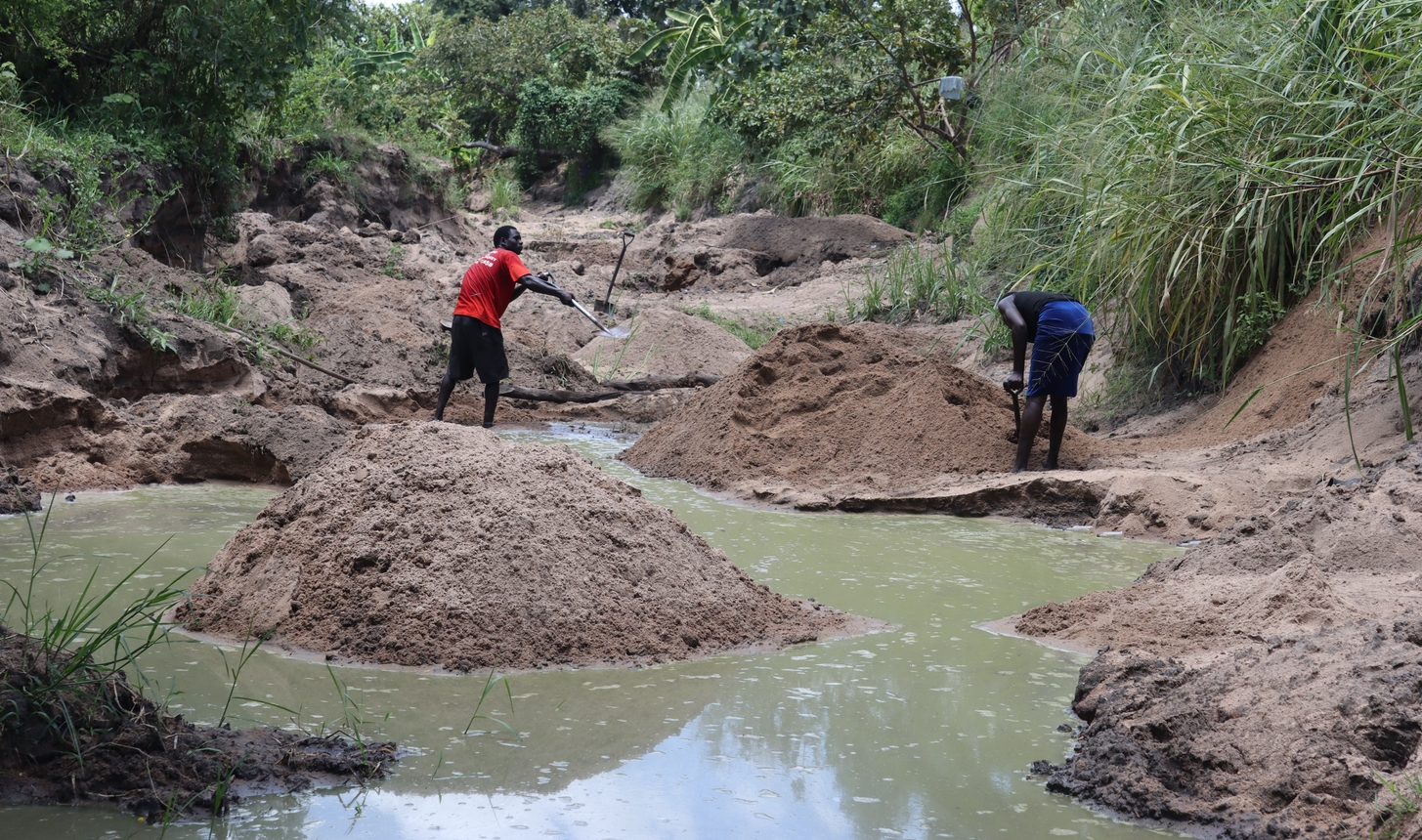
Downstream along the Asisi River in Pachara Sub- County Adjumani district, artisanal sand miners have dug the riverbed to extreme depths, leaving a nearly two-kilometres trail of destruction lined with dead tortoise shells, snails and rotting aquatic plants.
The Asisi River is one of several streams across Adjumani district where unregulated sand mining is thriving to supply a booming local construction sector. An estimated 20 trucks haul sand from the river daily, according to a local social worker.
At one extraction site, women, men and even children, use shovels and wheelbarrows to haul out sand. The site has attracted workers from across Adjumani district, with operations running late into the wee hours of the night.
Despite the scale of the operations, there is no regulatory oversight on the ground. Pachara Sub- County authorities keep no records of how many tons of sand leave the site, miners pay no revenue and environmental and legal safeguards go unenforced.
According to Francis Mindra, the Pachara Sub- County Chief, locals view the sand as a communal resource and feel no obligation to harvest it sustainably or submit to local regulation. Speaking after a site monitoring visit organized by Friends of Zoka under the Strengthening Environmental Accountability and Climate Action in West Nile and Karamoja (SEA-WNK) project, Mindra said local authorities plan to launch a community education drive to change that mindset.
For many households, artisanal mining is their primary source of income. Unpredictable rainfall patterns have hurt local agriculture, pushing more residents into mining to survive, according to Patrick Asilaza, a resident of Marindi Parish. He warned that without concrete efforts to diversify livelihoods, more locals will turn to sand mining, stone quarrying and other forms of artisanal extraction.
District authorities are using SEA-WNK community engagement activities to promote alternative livelihoods. Speaking during the monitoring visit at the Asisi site, Adjumani District Natural Resources Officer, Charles Giyaya, advised the miners to seek guidance from officials to regularize their mining operations.
In the meantime, surging demand and a growing workforce are taking a heavy toll on the local ecology. Deep riverbed excavation is damaging waterways, while stone quarrying is dismantling rock formations, such as Ojigo in Ibibiaworo Parish, Pakele Sub- County, ultimately destroying habitats for birds and animals and felling mountain tree species.
Giyaya said Adjumani district is conducting a twin review of its Environment and Natural Resources ordinance and its Production and Marketing ordinance, which will tighten regulations on natural resource exploitation once enacted.
Even as leaders push for stricter regulations, commercial truckers continue to haul sand from Adjumani’s threatened streams across the border—underscoring the urgent need for action.
At Ayugi River bordering with Amuru district, sand mining goes on day and night. Trucks arriving from as far as Gulu City, Elegu and Nimule in South Sudan haul sand at industrial quantities. The local authorities say, being a frontier resource, their mandates to regulate is limited once the truckers cross the district borders. “This is where we need the Environmental Police to help us with the enforcement of the regulations,” says James Eberu, Adjumani District Environment Officer.
The North-West Nile Environment Police is located across River Nile in the neighbouring Moyo district, with a few officers deployed in Adjumani. However, limited mobility has curtailed their field operations according to one of the officers who prefers anonymity.
So far, the ongoing mining activities have severe consequences, including the destruction of physical infrastructure. At Adidi Stream in Pakele, miners have dug deep beneath Adidi Bridge, undermining its foundation and putting it at risk of imminent collapse.
The National Environment Management Authority (NEMA) Act strictly prohibits unregulated sand mining in riverbeds, warning that it causes severe riverbank erosion, degrades water quality, and compromises the structural safety of bridges and culverts. Sections 52 through 55 of the Act set strict parameters for managing lakes, rivers, and wetlands. Activities that drain, tunnel, or alter the natural hydrological function of a river system without written authorization are deemed illegal.
The Ministry of Energy and Mineral Development is also developing the Building Substances Bill, 2025 that will regulate sand mining, amongst other building substances, by moving commercial sand extraction out of the informal sector and subjecting it to mandatory commercial licensing, government royalties and fees, and strict environmental and safety safeguards. The initial draft of the Bill was completed in October 2025 and awaits Cabinet approval before being discussed by Parliament.
Article Written by John Unzima for the "Strengthening Environmental Accountability and Climate Action in West Nile and Karamoja" project is funded by the Danish Ministry of Foreign Affairs (MFA) through Danida. The project is implemented in the districts of Zombo, Madi Okollo, Obongi, Adjumani, Amudat and Nakapiripirit by a consortium of four national organizations: RICE West Nile (lead implementer), Friends of Zoka, Sustainable Plan and Action for Community Empowerment (SPACE) and Africa Center for Energy and Mineral Policy (ACEMP).