
Library
UGEITI 2023/24 UGANDA EITI REPORT
The 2023-24 - FINAl UGEITI Report - Web.pdf highlights the continued growth and reform of Uganda’s extractive sector, with a strong focus on transparency, accountability, and governance. Although commercial oil and gas production had not yet begun during the reporting period, the mining sector recorded significant growth, with mineral production value increasing by 87%, driven mainly by iron ore. Extractive industry revenues rose by 25%, contributing over 2% of government revenues, while the report also details progress in beneficial ownership disclosure, anti-corruption measures, and major projects such as the East African Crude Oil Pipeline. At the same time, it identifies ongoing challenges, including gaps in reporting, environmental compliance concerns, data quality issues, and the need for stronger legal and institutional frameworks to ensure sustainable and transparent management of Uganda’s natural resources.
Enhancing Sustainable Community-Based Management and Climate Resilience in the Lake Opeta Wetland System
The Lake Opeta Wetland System is one of Uganda’s most important wetland ecosystems, providing critical environmental, economic, and social benefits to more than 1.2 million people across north-eastern Uganda. Recognized as both a Ramsar Site and an Important Bird Area, it supports rich biodiversity, fisheries, livestock grazing, water resources, and climate resilience. However, increasing pressure from agricultural expansion, overgrazing, climate change, weak governance, and unsustainable resource use has led to significant wetland degradation over the past three decades. Protecting this vital ecosystem requires coordinated conservation efforts, stronger community participation, gender-responsive management, sustainable livelihood alternatives, and the integration of wetland conservation into local development planning to ensure long-term ecological health and community well-being.
2023 - 2024 UGEITI MONOGRAPH
The UGEITI 2023-24 - Monograph_ACEMP.pdf provides a concise overview of Uganda’s extractive sector performance during FY 2023/24, highlighting progress in transparency, accountability, and revenue disclosure under the Uganda Extractive Industries Transparency Initiative (UGEITI). Uganda achieved a 78.5% score in its first EITI Validation, while the mining sector recorded significant growth, with production value increasing by 87% to UGX 464.7 billion, driven largely by iron ore. The report also details the sector’s contribution to the economy, including UGX 606.4 billion in government revenues, 1.28% contribution to GDP, and employment of over 6,100 people. In addition, it presents key information on production, exports, revenue reconciliation, data quality, and governance challenges, while offering recommendations to strengthen reporting, beneficial ownership disclosure, environmental accountability, and overall extractive sector governance in Uganda.
Assessing the Effects of Climate Change on Livelihoods, Human Rights, and Environmental Protection in the West Nile Region of Uganda
The report shows that climate change is severely disrupting livelihoods, human rights, and environmental resources in West Nile, where subsistence farming dominates and climate shocks like erratic rainfall, droughts, and floods are driving crop failure, pasture loss, livestock disease, and reduced trade. Vulnerability is uneven—women, youth, persons with disabilities, refugees, and poor households face the greatest deprivation in food, water, health, and participation in decision‑making. Environmental degradation is accelerating, with shrinking water bodies, declining soil fertility, vegetation loss, and rapid conversion of forests and wetlands into cropland. The report concludes that integrated, inclusive, and locally tailored actions—spanning climate‑smart agriculture, diversified livelihoods, social protection, sustainable land use, and participatory governance—are essential to build resilience and safeguard both people and ecosystems in West Nile.
Second Annual Petroleum Scorecard
Since the first edition of the petroleum development scorecard, many developments have taken place as the country prepares to produce first oil around 2020/21. In this second scorecard, therefore, we assess Uganda’s preparedness to enter the development phase of the subsector and its capacity to ensure that the exploitation of oil and gas resources benefit every Ugandan and leads to fair and equitable development across the country.
First Annual Petroleum Development Scorecard
It is a tool for assessing and ranking performance across a bench mark of indicators that are aligned with national development priorities. These indicators include: Legal, policy and institutional framework, sectoral linkages, value addition, Health, Safety and Environmental Management, local content, and infrastructure development among others.
Second Annual Mining and Mineral Scorecard
The second edition of this scorecard assessed the operationalization and functioning of the systems and frameworks for the subsequent achievement of sustainable development in the country. Using both secondary and primary data, engagement of stakeholders in the sector, the scorecard assessment analysed the performance of the sub-sector. Key findings suggest that the overall average performance of the sector is at 43.7%, which is a slight improvement from the 40.4% registered in the inaugural scorecard launched in 2016.
First Annual Mineral Development Scorecard
The purpose of the scorecard is to assess the performance of the subsector at each stage of the value chain and identify key interventional areas aimed at enhancing the contribution of the sector towards achieving the objectives of Vision 2040.
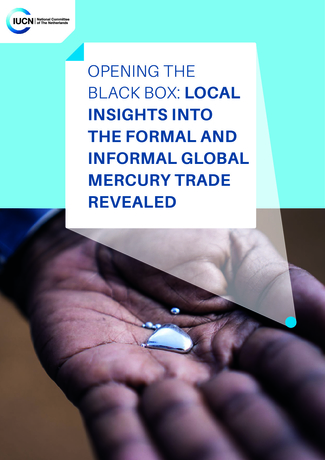
Opening the black box; Local insights into the formal and informal mercury trade revealed
Mercury is continually used in the artisanal and small-scale gold mining (ASGM) sector even though it is highly poisonous to both humans and the environment. There are an increasing number of projects, initiatives and conventions, including the Minamata Convention, working on the reduction of mercury use in ASGM.
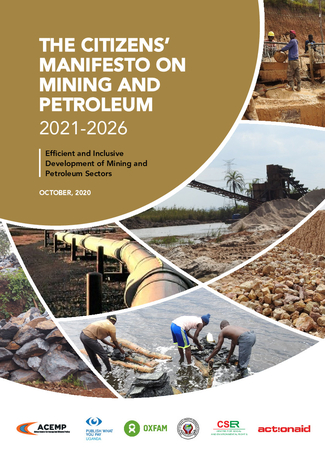
The citizen's manifesto on mining and petroleum
This manifesto is a compilation of citizens’ voices. It is a concerted appeal by Ugandans to the next cohort of political leaders in the 2021-2026 political cycle to strive to ensure that development and management of petroleum and mining industry resources is fair, just, inclusive and sustainable.